World War III: LET IT BE

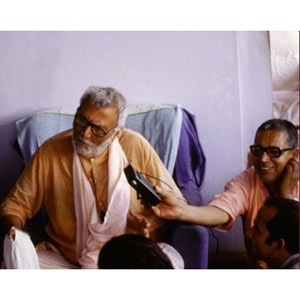
Srila Bhakti Rakshak Sridhar MaharajStudent: Many people are worried about nuclear war. They think it may come very soon.

Sridhar Maharaj: That is a point on a line, a line on a plane, a plane in a solid. So many times wars are coming and going; so many times the sun, the Earth, and the solar systems disappear, and again spring up. We are in the midst of such thought in eternity. This nuclear war is a tiny point; what of that? Individuals are dying at every moment; the Earth will die, the whole human section will disappear. Let it be.

We must try to live in eternity; not any particular span of time or space. We must prepare ourselves for our eternal benefit, not for any temporary remedy. The sun, the moon, and all the planets appear and vanish: they die, and then again, they are created. Within such an eternity we have to live. Religion covers that aspect of our existence. We are told to view things from this standpoint: not only this body, but the human race, the animals, the trees, the entire Earth, and even the sun, will all vanish, and again spring up. Creation, dissolution, creation, dissolution—it will continue forever in the domain of misconception. At the same time, there is another world which is eternal; we are requested to enter there, to make our home in that plane which neither enters into the jaws of death nor suffers any change.

 
Continue reading

Ore Mana Bhalonahi Lage E Samsar

Author: Bhaktivinoda Thakura

Book Name: Kalyana Kalpataru

(Section: Upalabdhi: Nirveda-Laksana-Upalabdhi Song 1)

(1)
ore mana, bhalonahi lage e samsar
janama-marana-jara, je samsare ache bhara,
tahe kiba ache bol’ sar

(2)
dhana-jana-parivar, keho nahe kabhu ka’r,
kale mitra, akale apar
jaha raknibare cai, taha nahe thake bhai,
anitya samasta binasvar

Continue reading

Nothing can obscure our spiritual progress except our own false ego.

Srila Bhakti Rakshak Sridhar Maharaj

  • Nothing can obscure our spiritual progress except our own false ego. I am my own worst enemy.
  • Devotion to the Absolute means sacrifice – “die to live.”
  • If we have an idea of the infinite broadness and depth of the Absolute, how can we value anything here?
  • To identify with the interest of our family, society, or country is extended selfishness.
  • When everything is measured from the standpoint of selfishness and not the universal interest – that is the cause of all our troubles.
  • We must learn to critique ourselves and appreciate the environment.
  • The infinite comes down to welcome, to fully embrace the finite – that is Vrndavana.
  • In Vrndavana, not a corner is left neglected. Every grain of sand, every blade of grass, is well represented there with personality.
  • Existence without consciousness is to exist with no purpose. But when existence is endowed with consciousness, it can search for its own good; ecstasy.
  • Our relationship with the subjective is that of reverence and devotion to the higher entity, and not that of exploitation or enjoyment.

(DIVINE WORDS Of His Divine Grace Srila Bhakti Raksaka Sridhar deva Goswami)

Ecstasy can exist by itself.

You are not a child of this soil. You may be captive here, but this is not your home; this is a foreign land.

If we cross beyond the vision of light-consciousness, we shall find the real necessity of our existence: happiness – ecstasy – and divine love.

After establishing ourselves in the realm of consciousness, we must establish ourselves in the realm of divine love, ecstasy and beauty.

Ecstasy is above light; transcendental mellow is above consciousness. Beauty and charm are above mere consciousness and understanding.

Feeling is not complete in itself. Feeling must be for something. So the fullest conception of a perfect thing is something which is full in beauty or ecstasy.

 
Continue reading

Srimad Bhagavatam 6.11.24

ahaṁ hare tava pādaika-mūla-
dāsānudāso bhavitāsmi bhūyaḥ
manaḥ smaretāsu-pater guṇāṁs te
gṛṇīta vāk karma karotu kāyaḥ

TRANSLATION

O my Lord, O Supreme Personality of Godhead, will I again be; able to be a servant of Your eternal servants who find shelter only at Your lotus feet? O Lord of my life, may I again become their servant so that my mind may always think of Your transcendental attributes, my words always glorify those attributes, and my body always engage in the loving service of Your Lordship?

(Srimad Bhagavatam 6.11.24)

Material miseries and the Lords mercy.

(Sri Purusottama Matha, Puri, May 7, 1929)

This material world is temporary—nobody has come here to live forever. When the Supreme Lord keeps one in a particular place, he should gladly stay there and accept His rewards and punishments. All types of rewards and punishments awarded by the Supreme Lord are meant for our benefit. We welcome the rewards of the Lords external energy, Maya, whereas we consider her punishments as troublesome. Since the punishments of Maya are awarded so that one can obtain the Lords mercy, the devotees do not disregard them; rather they gladly accept them as the Lords mercy and simply tolerate them. Those who cannot understand worldly inconveniences to be the Lords mercy ultimately fall into a state of disappointment while searching for material happiness and advancement. Next Saturday, the twentieth day of Vaisakha, is the candana-yatra festival.

During the summer, Sri Radha-Madana-mohanadeva enjoy water pastimes at Narendra-sarovara. During this time many pilgrims visit Sri Ksetra and get respite from their various miseries, as well as the heat. You should come to Sri Purusottama-Ksetra and become relieved of all material distress by hearing the glories of Hari. Our material miseries and scarcities will go away by participating in festivals in the association of those who serve the Supreme Lord. To always remain engaged in hearing and chanting the glories of Lord Hari is the instruction of saintly persons, scriptures, and the Supreme Lord.

We are well by the mercy of Lord Jagannatha. We are getting special opportunities to always chant the holy names of Hari. You should come to Sri Purusottama-ksetra as soon as possible and thus become freed from the clutches of worldly miseries.

(From Patramrita Nectar from letters by Srila Bhaktisiddhanta Sarasvati Goswami Thakura Prabhupada)

Sri Caitanya Bhagavat and Srila Vrindavan Das Thakur

About Sri Caitanya Bhagavat and Srila Vrindavan Das Thakur

Srila Bhaktisiddhanta Saraswati Goswami Prabhupad

চৈতন্য নিতাই কথা, শুনিলে হৃদয়-ব্যথা
চিরতরে যায় সুনিশ্চিত।
কৃষ্ণে অনুরাগ হয়, বিষয়ে আসক্তি যায়
শ্রোতা লভে নিজ-নিত্য-হিত।।

By listening to discussion of Caitanya and Nitāi, all pain in the heart most certainly goes away for good. Devotion to Kṛṣṇa manifests and attachment to the sense objects goes away. Listeners attain their eternal welfare.

ভাগবতে কৃষ্ণ কথা, ব্যাসের লেখনী যথা
তার মর্ম বৃন্দাবন জানি।
শ্রীচৈতন্য ভাগবতে, বর্ণে অনুরূপ-মতে
গৌর-কৃষ্ণে এক করি মানি।।

Understanding the essence of the discussion of Kṛṣṇa from the pen of Vyāsa in Śrīmad Bhāgavatam, Vṛndāvana Dāsa described Gaurakṛṣṇa in Śrī Caitanya-bhāgavata accordingly, consider Him one (with Śrī Kṛṣṇa).

গৌরের গৌরব লীলা, শুদ্ধতত্ত্ব প্রকাশিলা
যে নিতাই দাস বৃন্দাবন।
তাঁহার পদাব্জ ধরি, অনুক্ষন শিরোপরি
গৌড়ীয় ভাষ্যের সঙ্কলন।।

Vṛndāvana Dāsa manifests the pure nature of Nitāi and His līlā of honoring Gaura. Holding His lotus feet
continuously atop my heard, I compile this Gauḍīya-bhāṣya.

শ্রীচৈতন্য ভাগবত , লীলা মণি মরকত
চৈতন্য নিতাই কথা সার।
শুনে সর্বক্ষণ কর্ণে, সহস্র-মুখেতে বর্ণে
গ্রন্হরাজ মহিমা অপর।।

Śrī Caitanya-bhāgavata is an emerald of jewel-like līlā and discussion of Caitanya and Nitāi are its essence. It is heard constantly by the ears and described by thousands of mouths. The greatness of this king of scriptures is boundless.

(From Sri Caitanya Bhagavat Gaudiya Bhasya)

Fully Satisfied, Fully Surrendered

Śrīla Bhakti Rakṣak Śrīdhar Dev-Goswāmī Mahārāj remembers his dear friend Śrīpād Kṛṣṇa Dās Bābājī Mahārāj.

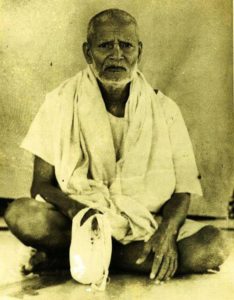
We know that Kṛṣṇa Dās Bābājī Mahārāj has left this world. We would like to remember his life and activities as much as possible. I first met him in 1926 or so. I found him shortly after I joined Gauḍīya Maṭh. He returned from a preaching tour with Bhāratī Mahārāj at that time. He was young, smart, beautiful, jolly, and very firm in his principles, especially towards Nām-bhajan. He came from a respectable, high family from Dacca, [Munchi Ganga?], which at present is in Bangladesh. At that time it was all part of Bengal in British India. I next saw him when he came back with a preaching party from Naimiṣāraṇya and western parts of India with Bon Mahārāj. Some natural friendship grew between us. Perhaps our similar high social rank, similar education, similar simplicity, and similar earnestness for Kṛṣṇa consciousness brought us together, gradually and intimately. I had a closer connection with him in the latter part of ’27 in New Delhi.

For a few weeks, we were allowed to work together there and our intimacy grew. Then, towards ‘29 or so, he was in [Bali Hati?] in Bengal in a village Maṭh going on with his Nām-bhajan. I made a request to Prabhupād, “He is an educated young man. His service may be very useful at present for preaching in New Delhi. If you allow, I will ask him to come and join me in my activities.” I was then Maṭh commander in New Delhi; through me, the Maṭh was founded there.

Prabhupād gladly gave his consent: “If you can take him and engage him in preaching service for Mahāprabhu, then you will do the work of a great, a real, friend to him.”

Continue reading

About Jiva Tattva

Divine Words of Guardian of Devotion

Consciousness means to be endowed with free will. Without free will, no consciousness can be conceived. Consciousness means free will. This individual point of consciousness (jiva) means very meager free will. By the exercise of his free will, the jiva is asserting itself. It may go that side (Vaikuntha), or this side (the land of exploitation). Some jivas are going that side; some are coming to this side from the marginal plane.

Free will is the first action of coming into the land of exploitation. It is by free choice. Svabhava, or independence, is already there in the jiva – the very nature is there. But as the resulting consequence, we see that some jivas have taken their chance on this side. They did not accept submission, but wanted to dominate. With this germinal idea of domination, the jiva enters into the world of exploitation. The consequence of exploitation is added to his free will, then that is the basis of all these developments in variegated nature. The original starting point is like that — the vulnerability of the free thinkers. Free thinking is vulnerable because it is very meager, small, anu-caitanya, anu-svairiatva – limited freedom, limitation of free will. That is the cause of this world.

Maya is automatically the effect of the outcome of the vulnerable free will of the jiva. The world exists, just as the prison house exists due to evil desires for the encroachment on another’s property. If that misdeed is absent, then the prison house is absent. Prison houses are necessary. Kara-kartr – Durga-devi is kara-kartr. It is mentioned in Brahma-samhitachayeva yasya bhuvanani vibharti durgaKara-kartr – prison keeper.  Why prison?  There are prisons because there is a vulnerability in the choice of freedom, leading to encroachment on another’s property. Otherwise, no world is necessary. But because it is possible, prison houses are there. If the disease is absent, hospitals are absent. No disease — no hospital. No crime — no prison house. No misuse of free will – no world!

No blame for the existence of this world or our suffering should be put on the shoulders of Krsna, nor on Maya. You and you alone are responsible for your own suffering. You are weak — your thinking, your capacity, your everything is weak.

Once in Puri, one gentleman came to our Guru Maharaja, Bhaktisiddhanta Sarasvati Thakura Prabhupada, and put a question:

How did our life in bondage begin? How it first started? Who is responsible – God, Maya, or jiva? There are three factors –God is there with His paramount power, Maya is there which comes to capture the jiva, and the jiva is independent we are told. Then how did it begin? What was the first cause of such a beginning – the jiva’s contact with the world? The jiva is free, and God is, of course, absolutely free and Maya is there. Maya is playing with us. But when it first starts, who is responsible?

Continue reading

Vaishnava Aparadhas

pujito bhagavan visnur janmantara satair api
prasidati na visvatma vaisnave ca apamanite

(Hari Bhakti Vilasa 10.315, from Dvaraka Mahatmya, conversation between Prahlada Maharaja and Bali Maharaja)

Any person who has criticized a Vaisnava, such sinners, even if they worship Lord Sri Visnu, the source of the whole world for hundreds of births, with such insulters of Vaisnavas, Lord Hari does not remain happy.

Skanda Purana lists six kinds of Vaisnava aparadhas (offenses):

hanti nindati vai dvesthi
vaisnavan na abhinandati
krudhyate yati no harsam
darsane patanani sat

Continue reading